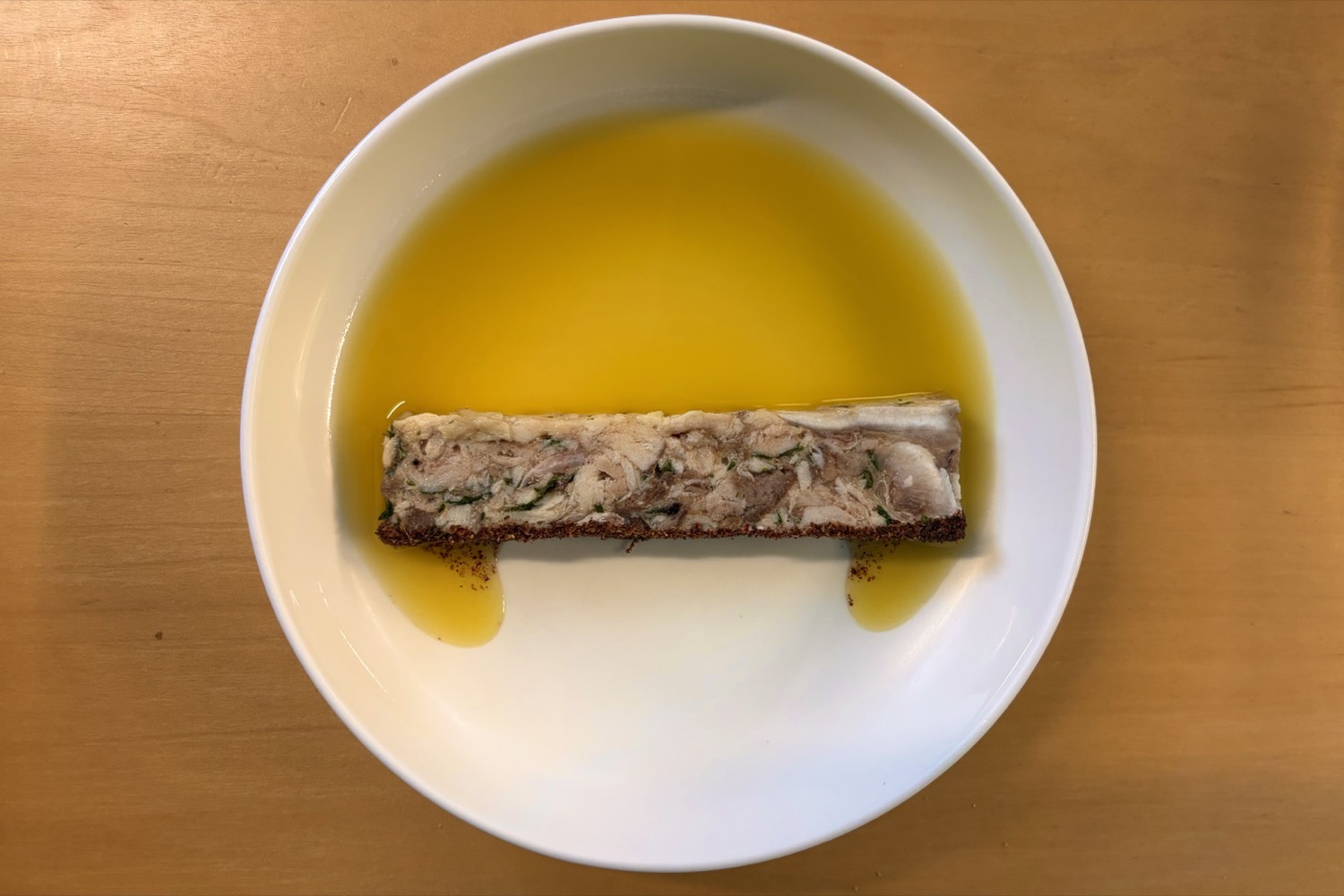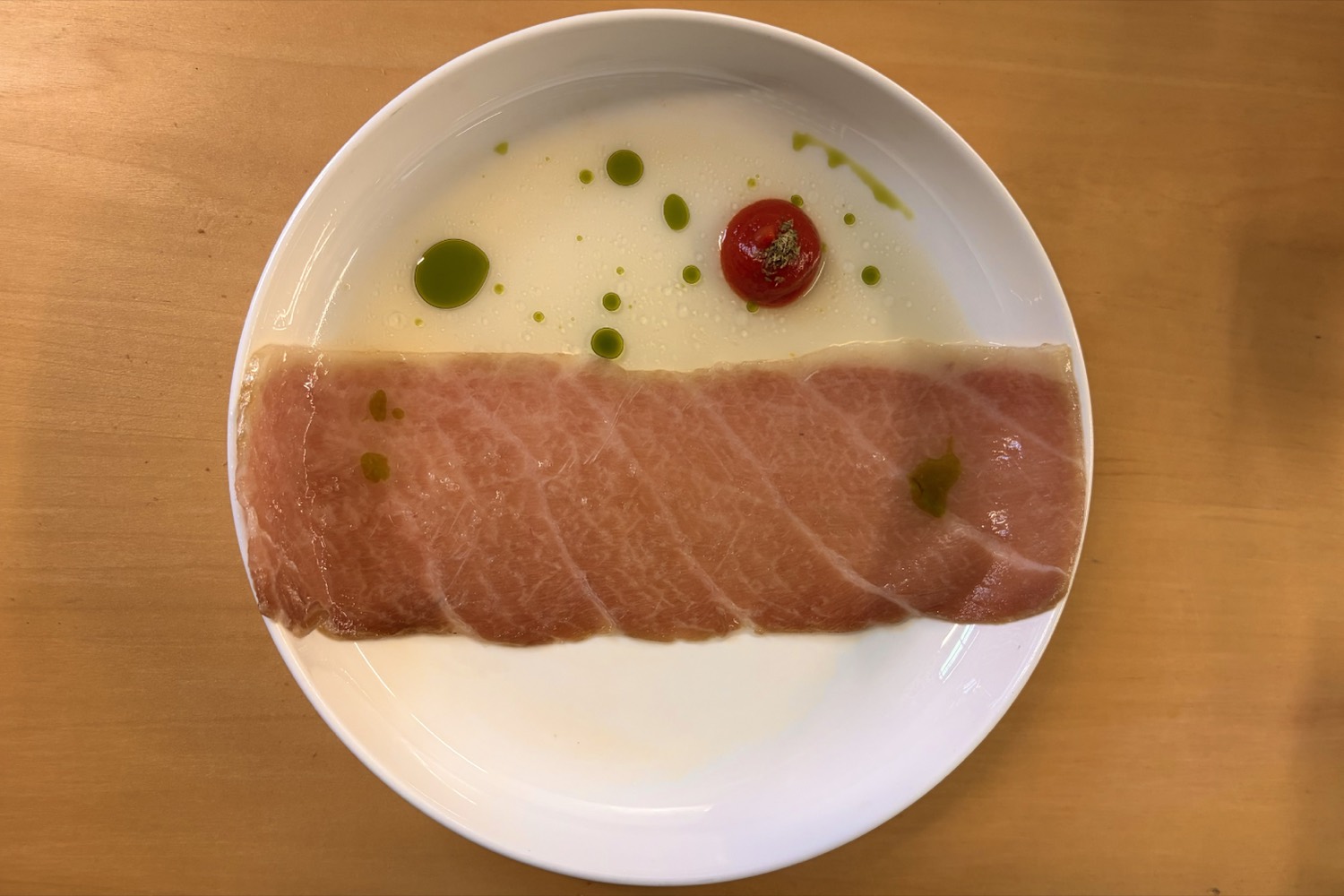

it looks like a charcuterie board, it's all fish
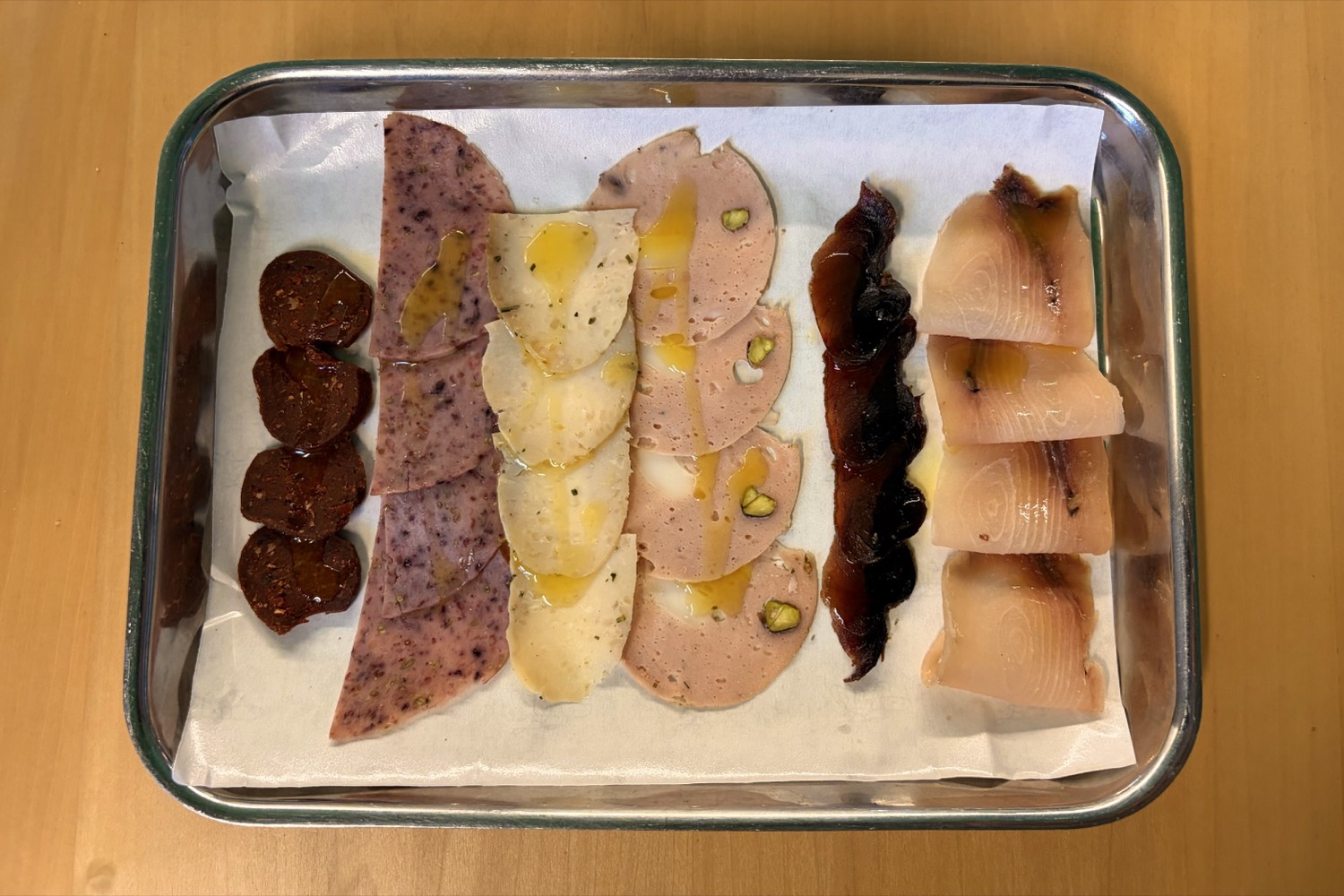
A tray with the slices in a row, one beside the other, and the eye reads them at once for what they seem: dark rounds of a spicy salame, a slice flecked like a mortadella, pale slices like lardo, a dark strip like coppa, and at the end the palest slices. It looks like any charcuterie board, the kind brought out on a Sunday.
Then the bite comes, and the trick breaks. There's no pork anywhere, it's all fish. The mortadella is fish, the salame is fish, the ham is fish. The textures are the right ones, the grain of the cured meat, the fat that melts, the savouriness of the curing, but the bottom of the flavour is always the sea, returning with every slice and not leaving.
This is where you understand what Angiò really is. They take the fish and make it do what has always been done with pork: they cure it, age it, stuff it. The parts that elsewhere end up as waste become hams and mortadelle. I eat one thing with my eyes and another with my mouth, and in that gap between the two lies the whole idea of the place: fish treated like meat, until it takes the shapes of meat. I don't remember them all, one by one, and that's a shame. But the point wasn't remembering the names, it was failing to tell them apart by sight.