
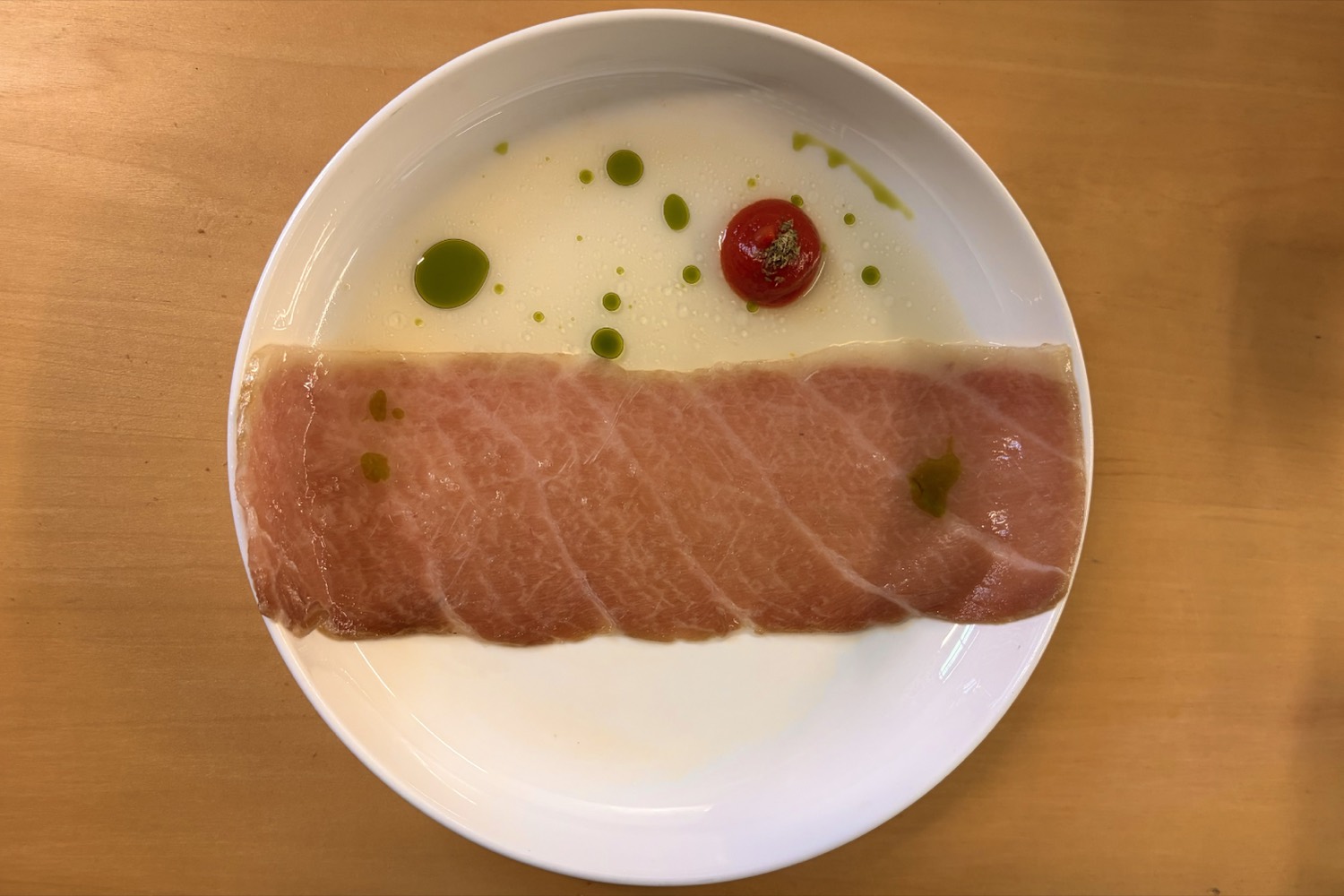
A strip of dry-aged tuna belly, pale pink, veins of fat running through it like marble. It sits on a clear base of tomato water, with a confit cherry tomato to the side and a few drops of green basil oil floating on top.
At the knife already it gives without any resistance, the fat opens up before it even reaches the mouth. And in the mouth it melts like nothing else, there's no other way to say it. I don't chew it, it comes apart on its own, the fat dissolves and leaves that enveloping trail that only good belly leaves and the rest of the tuna doesn't.
Around it everything is light, made on purpose not to weigh it down. The tomato water is clear, it tastes of real tomato but without pulp, a freshness that cleans. The basil comes with the oil, green, herbal. The confit tomato instead is decisive, concentrated, sweet and sour at once, and now and then I take it with a piece of belly to break the fat.
In here they age fish for weeks, treat it like meat, work it a thousand ways. And then in front of me arrives the belly almost bare, with three things around it. It's the fattiest cut of the tuna, the one that needs nothing, and the rightest thing they could do with it was to do almost nothing. Even in a sea butcher's, the best cut is left alone.